June 14, 2026 • Maria Russo • 9 min reading time • Prices verified June 24, 2026
When You Don't Need WiFi: Hunter X2 and X-Core Controllers for Reliable Multi-Zone Scheduling Without App Dependency
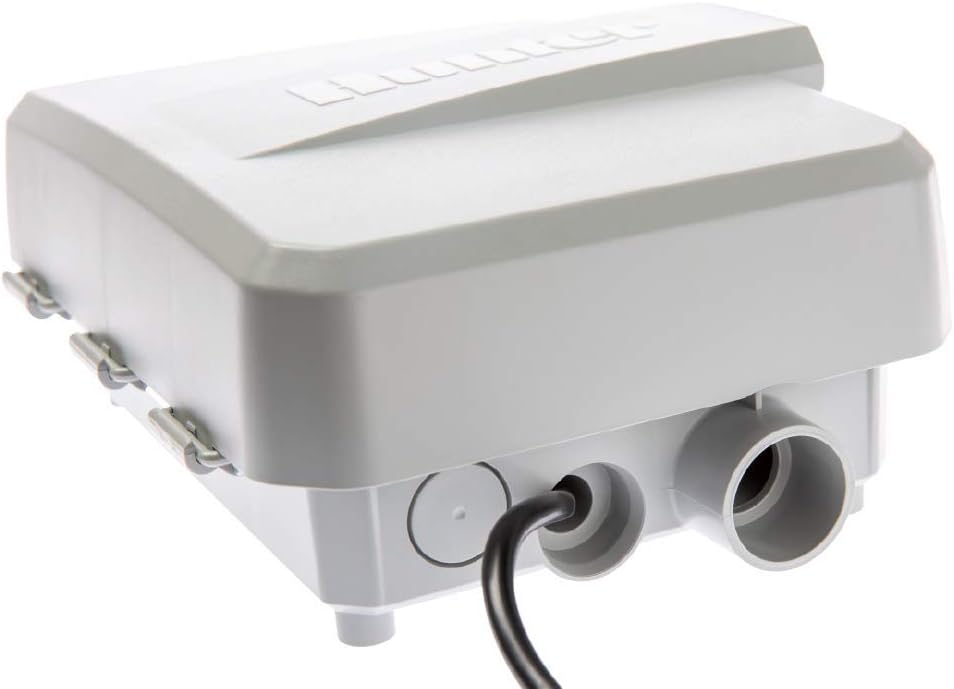
An irrigation controller is simply the timer-and-brain that decides when each section of your yard gets water. “Multi-zone” just means your system has separate pipe circuits — called zones — for different areas (lawn, shrubs, drip beds), and the controller opens and closes the valves that feed each one. For the last several years, nearly every buying guide has pointed homeowners toward WiFi-connected “smart” controllers that adjust schedules automatically based on weather data. That advice is often correct — but not always. If your install is in a location with unreliable internet, if you’re managing rental or commercial property where cloud-service disruptions are a real risk, or if you simply want a controller that runs the same solid schedule every week without app updates or subscription tiers creeping in, the case for a straightforward non-WiFi timer is stronger than the market conversation suggests. This article makes that case, then gives you the spec-level detail to decide whether the Hunter X2 or X-Core belongs on your project.
The Real Cost of Smart: What You’re Actually Buying Into
Before dismissing non-WiFi controllers as “old-school,” it’s worth being honest about what the smart-controller premium actually buys — and what it doesn’t.
A WiFi smart controller like the Rachio 3 ($279 street price as of May 2026) or Hunter’s own Hydrawise HC ($199–$399 depending on zone count) delivers two headline features: remote access via smartphone app, and weather-based schedule adjustment (called “ET-based scheduling,” where ET stands for evapotranspiration — the combined rate at which soil loses water through plant transpiration and direct evaporation). Both features are genuinely valuable in the right context.
But they come with three hidden dependencies that practitioners routinely underestimate:
1. Cloud service continuity. Rachio and Hydrawise both operate SaaS (software-as-a-service) backends. If the vendor changes pricing, pivots, or shuts down a service tier — as Hydrawise has done multiple times with its Enthusiast and Home plan restructuring — your schedule logic can be disrupted or feature-locked overnight. Per Landscaping Network’s irrigation controller comparison (2024), this is a meaningful consideration for property managers running five or more sites.
2. WiFi network reliability at the controller location. Controllers typically mount in garages, utility rooms, or exterior enclosures — often at the fringe of your router’s range. Contractors report that troubleshooting connectivity dropouts accounts for a disproportionate share of callback service calls on smart-controller installs.
3. Firmware and app dependency. A smart controller that was fully functional in 2022 may require a minimum iOS/Android version or a mandatory app update to maintain basic remote functionality. Non-WiFi controllers have no such exposure. A Hunter X-Core programmed in 2018 runs identically in 2026.
None of this means smart controllers are bad buys — they’re excellent for many users. The point is that the value equation depends on your specific use case, and the non-WiFi path deserves a real analysis rather than a reflexive dismissal.
Hunter X-Core vs. X2: What the Specs Actually Mean
Hunter produces two non-WiFi residential controllers worth serious consideration: the X-Core (entry-to-mid residential) and the X2 (mid-to-pro residential). Here’s where they differ in ways that actually affect your buying decision.
Hunter X-Core The X-Core is Hunter’s volume workhorse for standard residential installs. It’s available in 4-, 6-, and 8-zone configurations. According to Hunter Industries’ X-Core product specification sheet, the controller supports three independent programs (labeled A, B, and C), each capable of up to four start times per day. Per the spec sheet, it’s rated for both indoor and outdoor installation (the outdoor model ships with a lockable, UV-resistant enclosure).
Key practical capability: the X-Core supports a seasonal adjust function — a manual dial that lets you reduce or increase all run times by a percentage (from 10% to 150%) without reprogramming each zone individually. This is the non-WiFi equivalent of a crude ET adjustment. It won’t make autonomous decisions, but a knowledgeable operator can dial it down 30% in October and back up in April in about ten seconds. Utah State University Extension’s residential irrigation management guide recommends exactly this kind of monthly manual adjustment as a baseline water-conservation practice.
Pricing as of May 2026 sits in the $60–$90 range for the 6-zone outdoor model, depending on retailer.
Hunter X2 The X2 is the more serious tool. The spec-level differences matter here:
| Feature | X-Core (6-zone) | X2 (6-zone) |
|---|---|---|
| Programs | 3 (A, B, C) | 4 independent programs |
| Start times per program | 4 | 8 |
| Zone run time resolution | 1 minute | 1 minute |
| Sensor input terminals | 1 (shared) | 2 (independent) |
| Pump start relay | Yes | Yes |
| Solar Sync compatibility | No | Yes |
The two sensor input terminals on the X2 are the single most underrated spec on the sheet. On a typical residential install, one terminal takes a rain sensor (a device that shuts the system down when it detects rainfall — required by law in several states). On a single-terminal controller, that one rain sensor overrides the entire system. On the X2, you can wire a rain sensor to programs A and B (your lawn zones) while leaving programs C and D (covered patio drip, greenhouse beds) unaffected. For anyone running mixed zone types — overhead rotors plus drip — this is real operational value.
Solar Sync compatibility is the X2’s other differentiator. The Hunter Solar Sync is a standalone sensor module (sold separately, approximately $50–$70) that measures solar radiation and temperature and automatically adjusts the X2’s seasonal dial. This gives the X2 a form of weather-responsive scheduling without any internet connection, cloud service, or subscription. Per Hunter Industries’ X2 installation guide, the Solar Sync output maps directly to the X2’s seasonal adjust function and can modulate runtime between 10% and 150% based on local conditions. This is not the full ET intelligence of a Rachio or Hydrawise, but for a 6-zone residential system with consistent plant material, it closes most of the practical gap at a fraction of the cost.
X2 pricing as of May 2026: $100–$140 for the 6-zone outdoor model.
The Decision Frame: When Non-WiFi Wins
This is where the intermediate-practitioner reader earns the analysis above. Here are the four scenarios where the X-Core or X2 is the objectively better choice, and the scenarios where it isn’t.
Non-WiFi wins when:
→ The install is at a rental property, HOA common area, or second home. Remote access sounds great until the WiFi password changes, the router reboots, or a tenant calls an IT person who “fixed the network.” Owners consistently report that non-WiFi controllers on rental properties deliver dramatically lower maintenance overhead. A schedule set in March runs through October without intervention. This Old House’s irrigation buying guide (2025) notes that simplicity of operation is a primary criterion for property managers who aren’t on-site daily.
→ The system has six or fewer zones and consistent plant material. The ET-based scheduling advantage of a smart controller compounds across a large, diverse system — different zones with different sun exposure, plant types, and soil need genuinely different adjustments week to week. On a six-zone system running turf and mixed shrubs with consistent exposure, a well-programmed X2 with Solar Sync handles seasonal variation adequately, per the Irrigation Association’s performance testing protocol (IA-2022), which found manual seasonal adjust to be effective when adjusted monthly.
→ Budget is constrained and zones need to scale. A Rachio 3 at $279 covers 8 zones. If you need 16 zones, you’re at $558 plus a second app account to manage. Two Hunter X2 8-zone controllers come in under $280 combined and are wired to a shared valve manifold with no account management overhead.
→ Reliability in harsh electrical environments matters. Properties prone to lightning strikes, power surges, or grid instability see higher smart-controller failure rates due to WiFi radios and microprocessors. Non-WiFi controllers have simpler electronics. Contractors in storm-prone regions of the Southeast and Midwest frequently specify X-Core and X2 units on this basis.
Non-WiFi loses when:
→ You’re in a water-restricted municipality with tiered pricing. The water savings from genuine ET-based scheduling — Rachio’s published data suggests 30–50% reduction versus fixed-schedule timers — can offset the $150–$200 smart-controller premium within two to three seasons in high-rate utility markets. The math favors smart here.
→ The property owner is tech-forward and values remote visibility. For the smart-home integrator segment running Alexa routines or checking zone status from a phone, a non-WiFi controller isn’t a tradeoff — it’s a dealbreaker. That’s fine. Know your buyer.
→ The system has 12+ zones with diverse plant types. Above this complexity threshold, the labor cost of manual seasonal adjustment starts to rival the smart-controller premium, and the agronomic benefit of per-zone ET adjustments becomes material.
Installation Considerations Worth Flagging
A few practical notes that affect the X2/X-Core decision before you finalize the spec:
Transformer load: Both controllers ship with a 24VAC transformer sized for their rated zone count. If you’re adding a pump start relay and two sensor inputs simultaneously, confirm the transformer draw against Hunter’s published spec — this is a known edge case where a supplemental transformer or upgraded transformer is needed on fully loaded 8-zone units.
Wiring terminal compatibility: The X2 and X-Core use standard 18-2 or 18-8 multi-conductor irrigation wire. If you’re retrofitting an existing system from another brand, verify that the common (C) wire is continuous back to the manifold — partial rewires are the leading cause of zone-short errors on any controller swap.
Rain sensor spec: Hunter’s Clik sensors are the obvious pairing, but any normally-closed rain sensor wired to the sensor terminal will work. If local code requires a wireless rain sensor (some jurisdictions do), the X2 accommodates wireless sensor receivers through the same terminal.
The Bottom Line
By the numbers:
- Hunter X-Core 6-zone: ~$75 street, 3 programs, 1 sensor input, no Solar Sync
- Hunter X2 6-zone: ~$120 street, 4 programs, 2 independent sensor inputs, Solar Sync-ready
- Delta to Rachio 3 (8-zone): $160–$200 more for WiFi, app access, and full ET scheduling
- Solar Sync add-on: ~$60, converts X2 to weather-responsive scheduling without cloud dependency
If you’re specifying for a rental, HOA, rural property with marginal WiFi, or any install where the word “subscription” makes the client uncomfortable, the X2 with Solar Sync is a coherent, professionally defensible spec at roughly half the cost of the Rachio 3. It won’t win a feature-sheet comparison, but it will run a multi-zone residential system reliably for ten-plus years without a firmware update.
The decision rule is simple: if the owner will be on-site and engaged, and water rates are high, go smart. If the goal is set-and-forget reliability with zero cloud dependency, the X2 is the answer. The X-Core is the right call when Solar Sync isn’t worth the added complexity and budget is the primary constraint.
The irrigation industry has done a good job evangelizing smart controllers — and for good reason. But the best controller for any given project is the one that matches the operational context, not the one with the most features. On that criterion, Hunter’s non-WiFi lineup earns its place in a serious practitioner’s specification toolkit.