April 28, 2026 • Maria Russo • 9 min reading time • Prices verified June 24, 2026
Smart Controllers Under $150 That Skip the Subscription Trap: Orbit B-hyve, ImoLaza, and Yardian Pro Compared
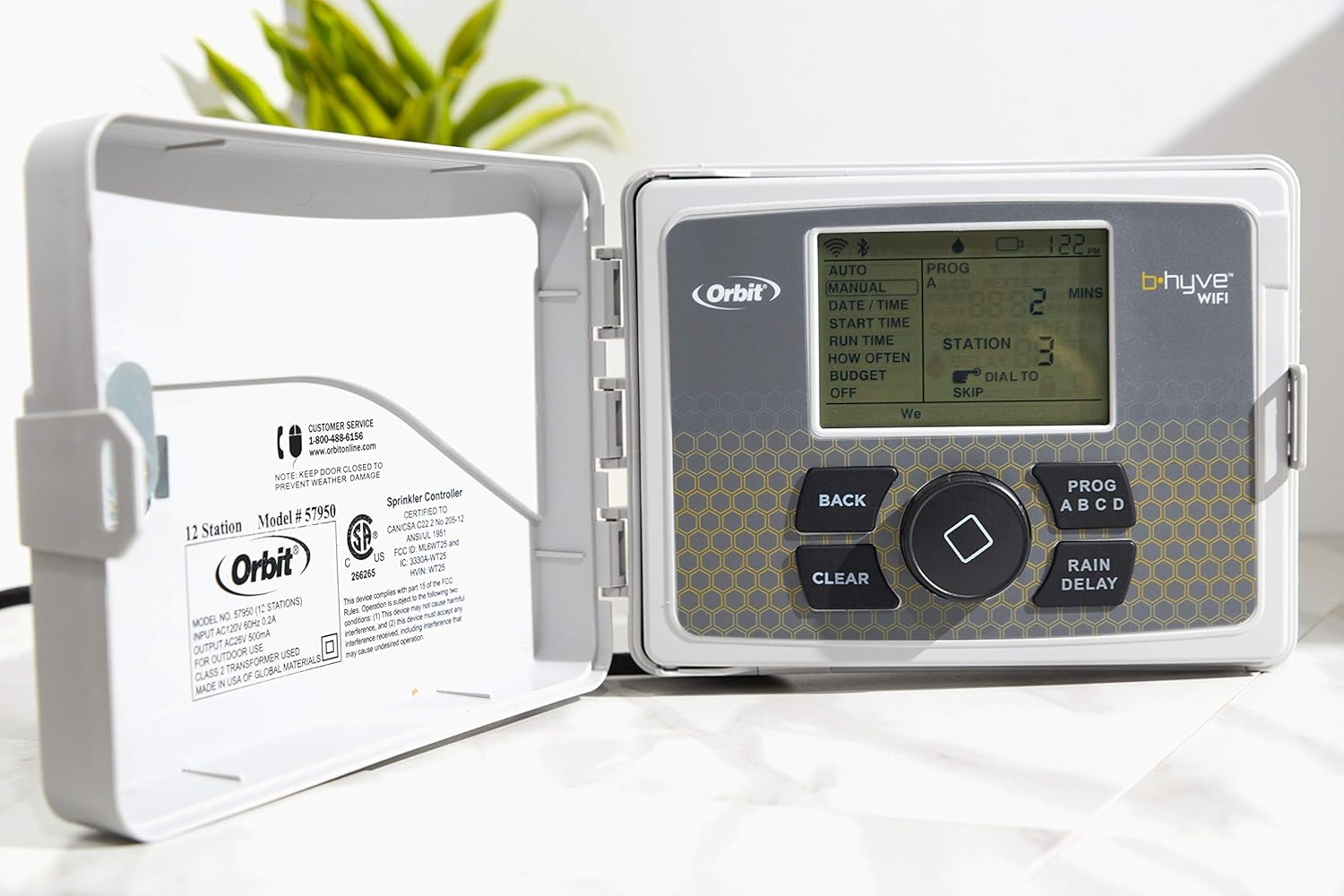
A smart irrigation controller is just a timer with a brain: instead of running your sprinklers on a fixed schedule you set once and forget, it pulls local weather data, adjusts run times based on rain forecasts and soil conditions, and skips watering when the ground is already saturated. The practical payoff is real — the EPA WaterSense Program’s specification document for WaterSense-labeled controllers (available at epa.gov/watersense/controllers) estimates that a properly configured smart controller can cut outdoor water use by 15–30% compared to a conventional timer. The catch most buyers discover only after purchase: several well-known smart controllers lock their most useful features — weather-based scheduling, multi-user access, advanced analytics — behind a subscription tier that adds $35–$99 per year on top of the hardware cost. This article focuses on three controllers that skip that trap entirely. Orbit B-hyve XR, ImoLaza Smart Sprinkler Controller, and Yardian Pro all land under $150 at current retail (May 2026) and deliver genuinely useful smart features with zero required monthly fee. Below, we compare them on the specs that actually drive the decision: zone count, weather intelligence approach, app quality, smart-home compatibility, and how they hold up against the mid-range field.
| EDITOR'S PICKImoLaza Indoor Smart Sprinkler… | Mid-tierOrbit B-hyve Smart Indoor/Outdo… | Budget pickOrbit B-hyve Smart Indoor/Outdo… | |
|---|---|---|---|
| Zone count | — | 12 | 6 |
| WiFi type | 2.4GHz | — | — |
| Weather skip | ✓ | — | — |
| Indoor/Outdoor | Indoor | Both | Both |
| Price | $111.99 | $85.49 | $76.49 |
| See on Amazon → | See on Amazon → | See on Amazon → |
Why the Subscription Question Matters More Than the Sticker Price
Let’s do the math before we get into specs.
3-year total cost of ownership — illustrative comparison:
| Controller | Purchase Price | Annual Fee | 3-Year Total |
|---|---|---|---|
| Rachio 3 (8-zone) | ~$279 | $0 (core features free) | ~$279 |
| Hunter Hydrawise HC | ~$199 | $0–$96 (Enthusiast tier) | $199–$487 |
| Orbit B-hyve XR (8-zone) | ~$90 | $0 | ~$90 |
| ImoLaza (12-zone) | ~$110 | $0 | ~$110 |
| Yardian Pro (8-zone) | ~$140 | $0 | ~$140 |
Prices reflect May 2026 retail averages.
The Hydrawise example is instructive. Family Handyman’s smart sprinkler controller roundup notes that Hydrawise’s Enthusiast plan — which unlocks weather-based flex scheduling and detailed flow monitoring — represents a real ongoing cost that buyers frequently miss at the point of purchase. If you’re managing a single residential system for five or more years, that delta is meaningful.
The Irrigation Association, in its published guidance on smart controller best practices, notes that subscription bundling in this product category has been increasing rather than decreasing. That trend makes the upfront identification of fee-free controllers more valuable, not less.
This doesn’t mean the under-$150 tier is automatically the right call — we’ll be honest about where these controllers fall short. But if you’re specifying a system where the homeowner will manage it themselves post-installation, or building a raised-bed drip setup where sophisticated zone management matters more than brand recognition, these three warrant serious evaluation.
The Three Contenders: Head-to-Head Comparison
Orbit B-hyve XR: The Accessible Default
Orbit
$85.49
In stock on Amazon
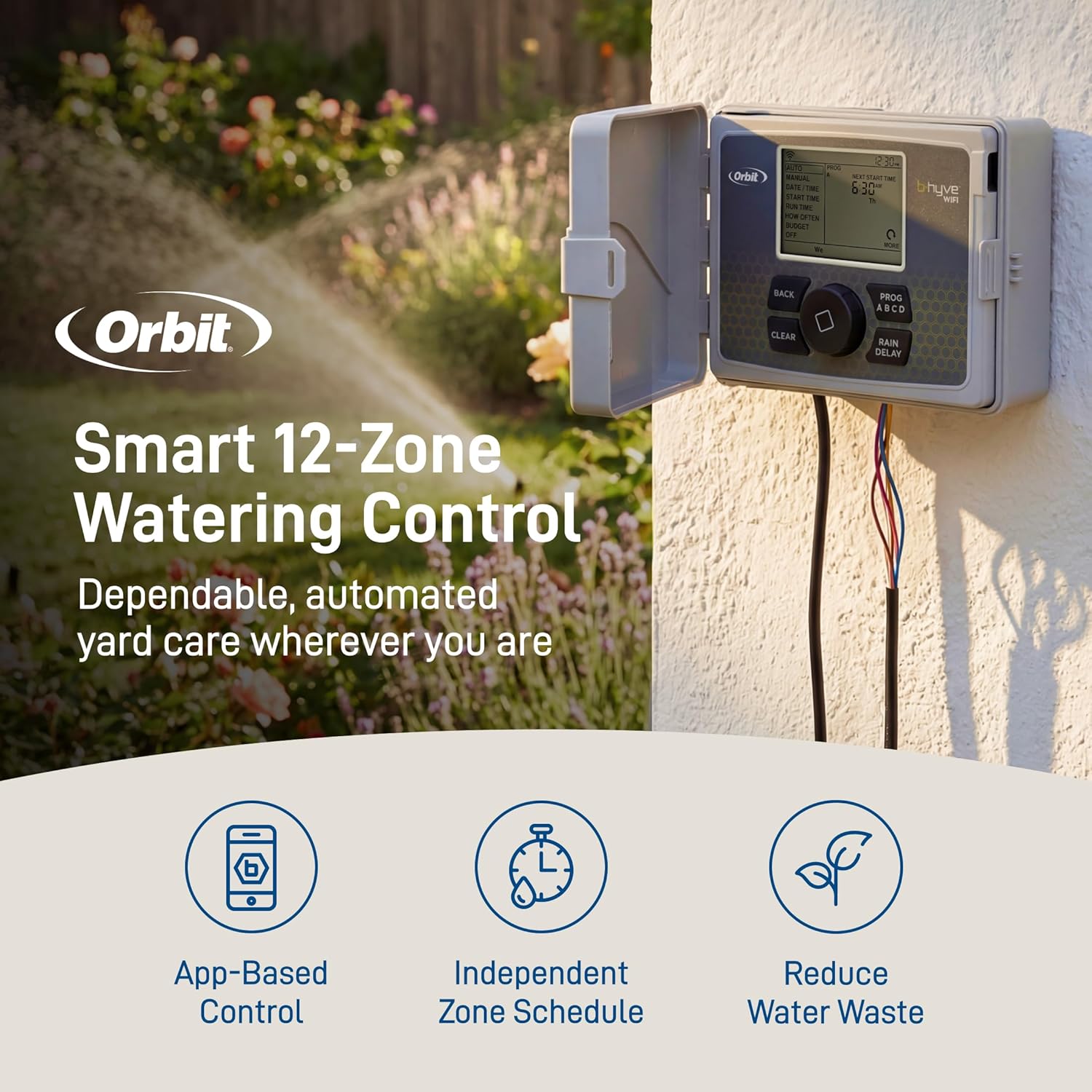
Check price on AmazonThe B-hyve line is the most widely distributed sub-$150 smart controller in the U.S., sold through major retailers in both indoor and outdoor-rated enclosures. The XR variant ships in 4-, 8-, and 12-zone configurations and adds a strengthened Wi-Fi antenna over the original B-hyve design.
Specs and weather intelligence: The B-hyve XR supports standard 24VAC valve operation, a master valve/pump start relay terminal, and a wired rain sensor input — useful if an existing sensor is already installed. Weather intelligence runs through Orbit’s app, pulling data from the National Weather Service and personal weather stations via Weather Underground integration. The EPA WaterSense Program has granted WaterSense certification to qualifying B-hyve models, confirming the scheduling logic meets verified water-efficiency thresholds — a credible third-party endorsement of the weather-skip functionality.
App and smart-home reality: The B-hyve app is functional and stable. Owners consistently note that the interface leans toward simplicity at the expense of granular control. You can set water budgets, seasonal adjustments, and zone-by-zone soil type and slope inputs — but per-zone ET (evapotranspiration) reporting at the level that more premium controllers offer is not available. Amazon Alexa and Google Home integration are supported; Apple HomeKit is not. This is a meaningful gap for HomeKit-native smart-home setups.
This Old House’s smart irrigation controller coverage consistently positions B-hyve as a competent entry point for homeowners who want weather-responsive scheduling without a steep learning curve or subscription cost.
Where it shows limits: Multi-zone systems requiring more than eight active zones, setups that need HomeKit integration, and installations where detailed water-use analytics matter will push past what B-hyve can reliably deliver. There is no onboard flow sensor support for leak detection — a feature that becomes more relevant as system value increases.
Orbit
$85.49
In stock on Amazon
Check price on AmazonImoLaza Smart Sprinkler Controller: 12 Zones, Real Weather Logic, Real Value
Orbit
$85.49
In stock on Amazon
Check price on AmazonImoLaza entered the U.S. market in 2023–2024 and has accumulated enough owner reviews to form a reliable picture. The headline specification is 12-zone capacity at a price point — currently around $110 — that undercuts most 8-zone competitors. That zone headroom is practically relevant: a lot of residential systems that appear to be 8-zone jobs at spec time end up needing 10 or 12 zones once drip circuits, tree irrigation zones, or slope zones with special scheduling requirements are added.
Weather intelligence approach: ImoLaza uses a localized weather service integration and supports evapotranspiration-based scheduling. Owner feedback and coverage in Family Handyman’s annual controller roundup have noted that the schedule-adjustment logic is more transparent than B-hyve’s — the app shows you why it skipped a scheduled run or reduced a zone’s duration. That transparency is useful for building trust in the system and for troubleshooting when something waters unexpectedly. Regarding WaterSense certification: as of this writing, ImoLaza’s certification status should be confirmed directly with your local water district if rebate eligibility depends on a WaterSense-certified product.
Smart-home compatibility: This is ImoLaza’s clearest differentiator in the sub-$150 tier. The controller supports Alexa, Google Home, and Apple HomeKit natively. For tech-forward homeowners managing irrigation alongside lights, locks, and thermostats through a HomeKit or Google Home hub, native integration without a bridge device matters. Landscaping Network’s irrigation controller selection guide notes that native HomeKit support remains uncommon in this price bracket, making ImoLaza a meaningful outlier.
Practical considerations: Owners consistently report straightforward installation and a clean app experience. The enclosure is indoor-rated only — no NEMA 3R weatherproof housing — so outdoor placement requires a separate waterproof box, which should be factored into total cost if the controller location is exposed. Flow sensor support is not listed in published specifications.
Orbit
$85.49
In stock on Amazon
Check price on AmazonYardian Pro: When You Want Weather Sensing On-Device
Orbit
$85.49
In stock on Amazon
Check price on AmazonYardian Pro takes a different architectural approach than both B-hyve and ImoLaza: it includes an integrated solar radiation sensor — a light sensor that feeds directly into its ET calculation — built into the unit itself, alongside IR motion detection that doubles as a yard-monitoring camera. This is not a gimmick. On-device sensing means the controller is not wholly dependent on a third-party weather station network for its key inputs.
Spec-level detail: The Yardian Pro handles up to 8 zones, runs on a 24VAC transformer, and supports a master valve terminal. The onboard sensor suite — measuring light, temperature, and humidity at the controller location — feeds a proprietary Smart Watering algorithm. Published specifications indicate the system also accepts Weather Underground station data as a secondary input. Alexa and Google Home integration are supported; HomeKit is not supported at this writing.
The camera question: The integrated HD camera generates sharply divided owner opinions. For homeowners who want a secondary yard-monitoring function, it is genuinely useful — especially for remote properties or vacation homes where irrigation status and yard activity both warrant a periodic check. For buyers who see it as scope creep on a utility device, or who have concerns about a networked outdoor camera, Yardian Pro may feel over-engineered. Neither reaction is wrong; it depends entirely on the use case.
Where Yardian Pro has an edge: The Irrigation Association’s best-practice documentation on smart controllers emphasizes that ET-based scheduling is only as accurate as the weather data feeding it. Systems in microclimates where nearby Weather Underground stations are not representative — hilly terrain, coastal zones with significant fog, rural properties — benefit from on-device sensing that reduces dependency on potentially distant or unrepresentative station data. Yardian Pro’s architecture directly addresses that weakness.
Where it shows limits: Eight zones is a hard ceiling. At $130–$145 retail, you are paying a premium over ImoLaza for on-device sensing and the camera. If you need 10 or more zones, Yardian Pro is not the answer regardless of its other merits.
Orbit
$85.49
In stock on Amazon
Check price on AmazonDecision Framework: If X, Then Y
Here is the honest comparison that should drive your choice between these three controllers.
If your system is 9–12 zones and you run a HomeKit household: ImoLaza is the only sub-$150 controller that covers both requirements simultaneously. The zone headroom and native HomeKit support make it the straightforward call.
If your system is 8 zones or fewer, HomeKit is not a factor, and you want the simplest possible install with strong retail availability: B-hyve XR. It is the widest-distributed controller in this tier, has the most installation documentation available from both Orbit and third-party sources, and its WaterSense certification is established. It will not surprise you, and it will not nickel-and-dime you.
If your property sits in a location where local weather station data is sparse or unreliable — rural, coastal, or mountainous terrain — and 8 zones is sufficient: Yardian Pro’s on-device sensing capability justifies the price premium for that specific scenario. The camera is bonus utility, not the reason to buy.
If your project will eventually scale significantly: Be honest about the timeline. If you are installing a 5-zone system now with a clear plan to expand to 14 zones in 18 months, spending $90 on B-hyve as a stopgap may cost more in total than starting with the right platform. The sub-$150 tier makes the most sense for systems that are genuinely complete as designed.
One final note on the subscription question: all three of these controllers currently offer their full feature sets with no required subscription as of May 2026. That is a point-in-time fact. Vendor pricing strategies in this category shift. The Irrigation Association’s published market resources and Family Handyman’s annual controller roundups (familyhandyman.com) are the most reliable sources for tracking changes as they happen. Check them before finalizing a long-term recommendation to a client or committing to a controller for a multi-year installation.
Sources consulted: EPA WaterSense Program, “WaterSense-labeled Controllers Specification,” epa.gov/watersense/controllers; Irrigation Association, “Smart Controller Definitions and Best Practices,” irrigation.org; This Old House, smart irrigation controller coverage, thisoldhouse.com; Family Handyman, “Best Smart Sprinkler Controllers,” familyhandyman.com; Landscaping Network, “Irrigation Controller Selection Guide,” landscapingnetwork.com.