May 3, 2026 • Maria Russo • 10 min reading time • Prices verified June 24, 2026
Programmable Hose Timers Ranked by Reliability: From $8 Mechanical Dials to $96 Brass WiFi Units
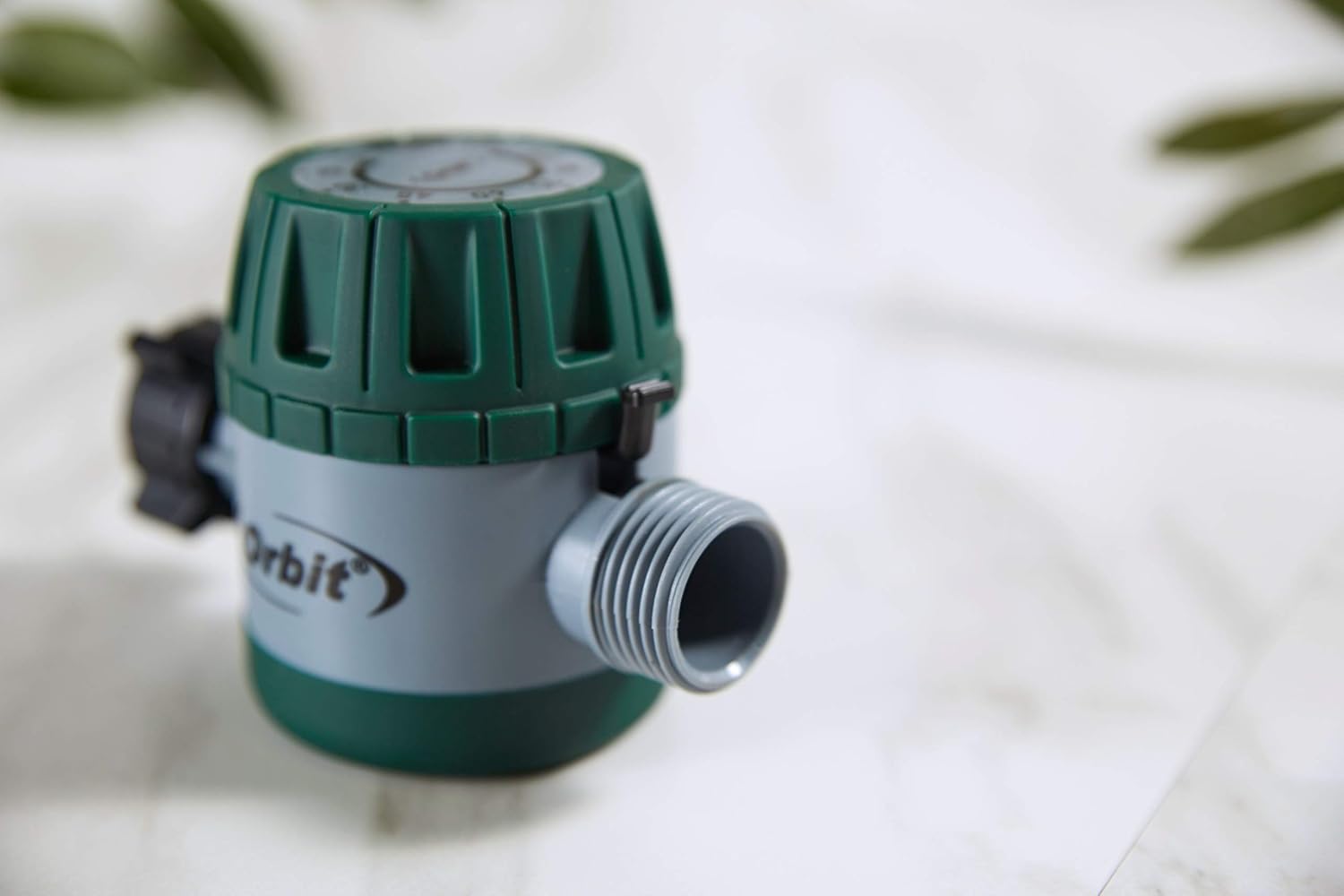
A programmable hose timer is exactly what it sounds like: a device that screws onto a standard outdoor spigot (the threaded hose bib on your house’s exterior wall), lets you dial in a start time and run duration, and automatically opens and closes the water flow without you touching a handle. Think of it as an alarm clock for your garden hose. At the low end, an $8 mechanical twist-dial gives you one watering window per day. At the high end, a $90+ WiFi unit lets you schedule multiple zones, skip rain days automatically, and adjust watering from your phone while you’re traveling. If you’re not ready to commit to a full in-ground smart controller system—or if you’re managing a raised bed, a container garden, or a seasonal drip setup that doesn’t warrant trenching—a hose timer is often the right tool. This guide ranks the major tiers by reliability, not just features, and gives you a clear decision frame for choosing the one that fits your situation.
Why Reliability Is the Only Metric That Actually Matters Here
It’s tempting to compare hose timers on feature count. WiFi! Rain sensor! Dual-zone! But out in the elements—mounted on a north-facing faucet in Phoenix in July or a Minnesota garage wall in October—features mean nothing if the valve seal leaks at 70 PSI or the LCD screen fogs over after two months of morning dew.
Reliability for a hose timer breaks down into three components:
- Valve durability — The solenoid or mechanical valve is the heart of the unit. It opens and closes potentially hundreds of times per season. Cheap plastic diaphragms crack; quality rubber or brass valve seats hold up.
- Controller longevity — Battery contacts corrode, LCD displays fail in UV exposure, and low-quality circuit boards fail in freeze-thaw cycles. These failures don’t show up in a two-week Amazon review window; they show up in month 14.
- Seal integrity under pressure — Residential hose bibs typically run 40–80 PSI (pounds per square inch, the measure of water pressure). A timer rated only to 43 PSI will leak or fail at the top of that range. Always check the manufacturer’s rated maximum operating pressure.
The Irrigation Association’s Landscape Irrigation Scheduling and Water Management guide flags this consistently: improper pressure management is the leading cause of drip and hose-end component failure in residential systems. The timer is the first point of contact with line pressure, and it has to hold.
The Five Price Tiers, Ranked by Reliability Profile
Tier 1: Mechanical Dial Timers ($8–$20)
Units like the Orbit Single Dial or comparable Melnor mechanical timers work on a simple clockwork or spring-loaded mechanism—no batteries, no circuit boards, no WiFi. You twist a dial to set a run duration (usually 0–120 minutes), and the timer closes the valve when the time expires. That’s it. No scheduled start; you still have to turn it on manually.
Reliability profile: Surprisingly high for what they are. Because there’s no electronics to fail and no battery contacts to corrode, the mechanical internals tend to outlast their plastic housings. The failure mode is almost always the O-ring seals or the housing cracking from UV exposure. Owners across aggregated reviews consistently report 2–4 seasons of reliable service before seal degradation causes dripping at the connection point.
The tradeoff: Zero automation. You are the scheduler. If you forget to turn it on, nothing waters. This is a convenience device, not a set-and-forget irrigation solution.
If X, then Y: If your goal is simply to avoid leaving the hose running for three hours by accident, a mechanical dial timer is sufficient and nearly indestructible. If you want to leave for a long weekend and know your garden waters itself, move up.
Tier 2: Single-Zone Battery Digital Timers ($25–$50)
This is the volume leader of the category. Units like the Orbit 1-Outlet Digital Hose Timer, the Melnor 65030-AMZ, and the Raindrip R675CT sit here. You get a programmable LCD display, 9V or AA battery power, and the ability to set one or two watering windows per day at a specific start time. Most are rated to 100–125 PSI, which covers the full residential range.
Reliability profile: This is where reviews diverge sharply by brand. This Old House’s 2025 hose timer review notes that units in this tier show the widest variance in long-term reliability—the difference between an Orbit or Melnor unit (backed by substantial warranty programs and widely available replacement seals) and a no-name import can be a full season of service life.
Key specs to check in this tier:
- Battery life: Quality units specify 1–2 seasons per 9V battery. Vague specs (“long battery life”) are a warning sign.
- IP rating: Look for IP54 or better (IP = Ingress Protection; the number tells you how well the unit resists dust and water splashing). IP44 units are borderline for year-round outdoor mounting.
- Backflow: USU Extension’s backflow prevention guide makes clear that a basic hose timer does not provide backflow protection—it’s not a vacuum breaker. If you’re running drip emitters, add a separate atmospheric vacuum breaker (AVB) downstream. Budget $8–$15 for this component.
The tradeoff: You get genuine set-and-forget automation for under $40. You lose remote adjustment, rain sensing, and multi-zone capability.
Tier 3: Dual-Zone and Multi-Program Battery Timers ($45–$75)
Units like the Orbit 2-Outlet Hose Faucet Timer or the Melnor 4-Zone Digital Water Timer step into real residential drip-system territory. A dual-outlet timer lets you run two independent schedules off one spigot—common for someone who has a raised-bed drip zone and a separate container-garden zone fed from the same faucet.
Reliability profile: The additional valve increases mechanical complexity, and aggregated owner reports flag that dual-outlet units are more vulnerable to differential pressure failure—if Zone A runs at high flow while Zone B is closed, the closed solenoid sees full line pressure. Family Handyman’s 2025 hose-end timer review recommends checking that dual-zone units are tested at their rated max PSI with one zone closed, not just both-open flow.
By the numbers:
| Tier | Typical Max PSI | Typical Battery Life | Zones | Rain Delay |
|---|---|---|---|---|
| Mechanical dial | 43–60 PSI | N/A | 1 | No |
| Single-zone digital | 100–125 PSI | 1–2 seasons | 1 | Manual only |
| Dual-zone battery | 100–125 PSI | 1 season | 2 | Some models |
| WiFi battery hybrid | 100–125 PSI | 6–12 months | 1–2 | Automatic |
| Full brass WiFi | 87–100 PSI | 6–12 months | 1 | Automatic + forecast |
The tradeoff: More flexibility, more to fail. The valve solenoids on budget dual-zone units are a known weak point. Orbit’s models have documented replacement-part availability; less-recognized brands often don’t.
Tier 4: WiFi-Enabled Battery Timers ($55–$80)
This tier is where the market has moved fastest since 2023. Units like the Orbit B-hyve Smart Hose Faucet Timer and competing units from Rain Bird’s hose-end lineup connect to your home WiFi (typically 2.4 GHz only—check before buying if your router is 5 GHz only), allow app-based scheduling, and integrate weather-based skipping. The B-hyve series connects to a dedicated hub or works in a mesh with other B-hyve heads.
Reliability profile: WiFi connectivity adds a new failure mode that has nothing to do with valves or seals: firmware and connectivity. Owners in long-run reviews consistently note that firmware updates can temporarily disrupt scheduling, and that weak outdoor WiFi signal causes missed watering cycles. EPA WaterSense program documentation on smart irrigation efficiency notes that connectivity dropouts are the primary reason smart hose timers fail to deliver their advertised water savings—the timer defaults to off when it can’t reach the cloud server, which means your plants don’t get watered.
App ecosystem stability matters here too. Orbit’s B-hyve app has a relatively long track record. Newer entrants in this tier have thinner app support histories—a genuine risk if the company discontinues the app in year three.
The tradeoff: Remote control and weather integration are genuinely valuable if you travel. But you’re now dependent on your home WiFi signal quality reaching the spigot, your router staying on 2.4 GHz, the manufacturer’s cloud servers staying active, and battery life lasting through the season.
Tier 5: Brass-Body WiFi Units ($80–$100+)
The top tier—units like the Rachio Hose Timer and the RainPoint WiFi Hose Timer in brass configuration—moves away from the all-plastic housing that dominates lower tiers. Brass valve bodies and fittings resist UV degradation, hold pressure more consistently across temperature swings, and handle the thread-stress of seasonal attachment and removal without cracking.
Reliability profile: Brass construction addresses the single most common long-term failure mode in plastic units: housing brittleness from UV and freeze-thaw cycling. The Rachio Hose Timer in particular has gained traction among landscapers who want Rachio’s scheduling logic—the same weather intelligence engine that powers the Rachio 3 smart controller—in a no-infrastructure package. It requires no hub, connects directly to 2.4 GHz WiFi, and integrates with Amazon Alexa, Google Home, and Apple HomeKit.
Spec sheets put the Rachio Hose Timer at a 100 PSI max operating pressure—competitive with mid-tier battery units—and manufacturer documentation confirms the unit includes a low-flow shutoff to prevent valve chatter at drip-system pressures (below 10 GPH flow rates, some solenoid valves chatter instead of seating cleanly; Rachio’s low-flow handling addresses this for drip users).
The tradeoff: At $96, you’re approaching the price of an entry-level in-ground smart controller valve assembly. The Landscaping Network’s drip irrigation component selection guide notes that if you’re already running PVC or poly mainline to a manifold, a smart valve in-line is almost always the more durable architecture. A brass hose timer makes most sense for temporary seasonal setups, rental properties where trenching isn’t authorized, or supplemental zones that don’t fit your main controller’s capacity.
The Decision Frame: If X, Then Y
Run through this logic before you buy:
- If you just need to stop forgetting the hose is running: Mechanical dial, $8–$15. Done.
- If you want automatic daily watering for one zone and won’t leave for more than a week: Single-zone battery digital, $25–$40. Orbit or Melnor, both with documented parts availability.
- If you’re running a two-zone raised-bed drip system off one spigot: Dual-zone battery timer, $45–$65. Verify max PSI with one zone closed, and add an AVB backflow preventer downstream.
- If you travel frequently and want weather-based skipping and remote control: WiFi battery hybrid, $55–$80. Confirm your outdoor WiFi signal first—dead signal equals missed watering.
- If you want brass durability plus Rachio’s scheduling intelligence without in-ground infrastructure: Brass WiFi unit, $85–$100. The Rachio Hose Timer is the clear editorial pick at this tier for its app ecosystem maturity and HomeKit/Alexa/Google compatibility.
- If your budget is pushing $100 and you have even a small in-ground manifold: Reconsider whether a hose timer is the right architecture at all. A Hunter or Rain Bird 1-inch inline valve with a Rachio 3 controller covers more zones at greater durability for a system that’s meant to scale.
One more invariant worth naming: regardless of tier, add a pressure regulator if your line pressure exceeds 60 PSI. Most drip emitters are rated for 15–30 PSI; running full line pressure through a hose timer into a drip layout will blow emitters off fittings and stress every O-ring in the chain. Per EPA WaterSense efficiency benchmarks, pressure management at the head of a drip system is one of the highest-leverage, lowest-cost interventions available—a $12 pressure regulator extends the life of every downstream component.
Buy the right tier for your actual use case, add backflow protection, manage pressure, and your hose timer will earn back its cost in plant survival rate inside one dry summer.