June 17, 2026 • Maria Russo • 9 min reading time • Prices verified June 24, 2026
Rachio 3 vs. Hunter Hydrawise vs. Rain Bird ESP-ME3: Which Smart Controller Platform Actually Delivers for Multi-Zone Yards
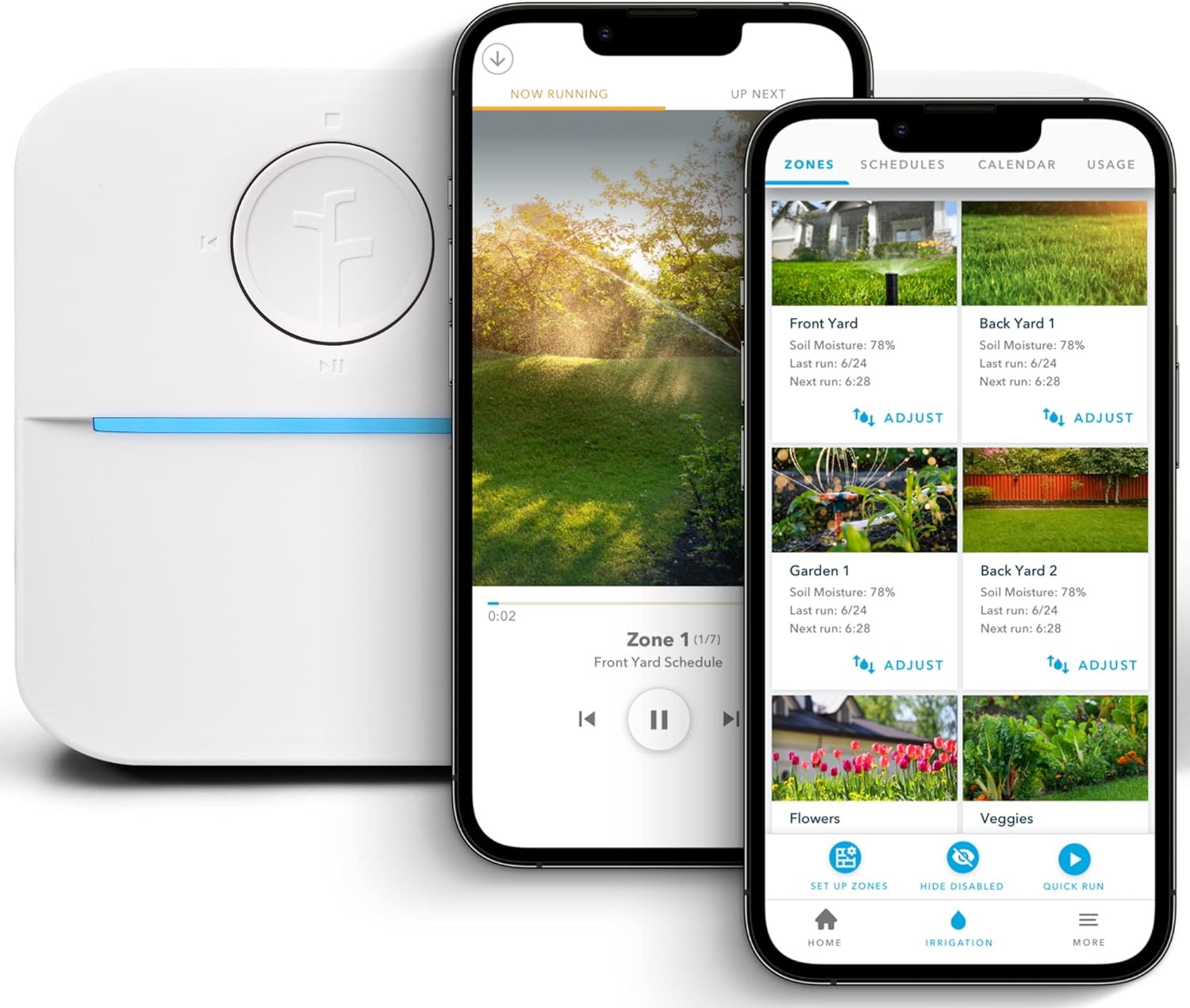
A smart irrigation controller is the brain of a sprinkler or drip system — the wall-mounted box that replaces your old mechanical timer and decides when, how long, and how much to water each zone. What makes it “smart” is its ability to pull in live weather data, skip watering on rainy days, and adjust schedules based on your specific soil type and plant material, all without you touching a dial. If you’re managing a yard with multiple watering zones — say, a lawn section, a shrub bed, and a drip-fed vegetable garden all running off the same backflow preventer — getting the controller decision right is the highest-leverage call in your whole system design. Buy the wrong box and you’re stuck rebuilding around it or paying for subscription features you never use. This guide cuts straight to the comparison so you can make a confident call before anything goes on order.
The Contenders at a Glance: Price, Zones, and Platform Commitments
Let’s orient around hardware and total cost of ownership — because for multi-zone residential buyers, “sticker price” is only half the story.
By the numbers (May 2026 market pricing):
| Controller | Retail Range | Zones (base / max) | Subscription Required? | WaterSense Certified? |
|---|---|---|---|---|
| Rachio 3 | ~$279 (8-zone) | 8 / 16 (two units) | No — free tier is functional | Yes |
| Hunter Hydrawise HC | ~$199–$399 | 6–12 / expandable | Yes — Enthusiast plan for full features | Yes |
| Rain Bird ESP-ME3 | ~$180–$250 | 4–22 (modular) | No — LNK WiFi module required (~$80) | Yes |
The EPA WaterSense program — which certifies controllers that can reliably reduce outdoor water use — has validated all three platforms, per the EPA’s WaterSense Specifications for Weather-Based Irrigation Controllers. That baseline matters because many utilities offer rebates tied specifically to WaterSense status; worth checking your local water authority before you finalize.
The deeper cost story is the subscription layer. Rachio 3’s free tier gives you weather intelligence, schedule management, and the flagship Flex Daily scheduling algorithm (more on that below) without paying anything beyond the hardware. Hunter Hydrawise’s most compelling features — historical water reports, soil moisture sensing integrations, and multi-site management — sit behind a paid tier. The Landscaping Network’s Smart Irrigation Controllers Buyer’s Guide (2024) flags this as a recurring friction point for residential buyers who expected a one-time purchase. Rain Bird’s ESP-ME3 avoids subscriptions entirely but requires the separately purchased LNK WiFi module to get any cloud connectivity at all — a cost the base retail price does not communicate clearly.
Scheduling Intelligence: Where the Real Differences Live
All three platforms offer weather-based skipping — the ability to not run when it rained or is about to rain. That’s table stakes in 2026. The meaningful differentiation is in how each platform builds a schedule from your inputs.
Rachio 3 — Flex Daily Scheduling
Rachio 3’s Flex Daily is the standout approach in this comparison. Instead of asking you to set a run time, Flex Daily builds a dynamic schedule from your soil type, plant type, sun exposure, slope, and nozzle type, then calculates actual evapotranspiration (ET — a measure of how much water the landscape loses to evaporation and plant transpiration on any given day) and waters only when the soil “account” is drawn down to your set threshold. In practice, this means the controller might run a zone for 14 minutes on Monday and skip it entirely until Thursday, adapting in real time. This Old House’s Best Smart Sprinkler Controllers roundup (2025) notes that owners consistently report meaningfully lower water bills in year two versus year one as the algorithm adapts to the property. The tradeoff: initial setup requires honest data entry. Put in the wrong nozzle type and Flex Daily’s math breaks down.
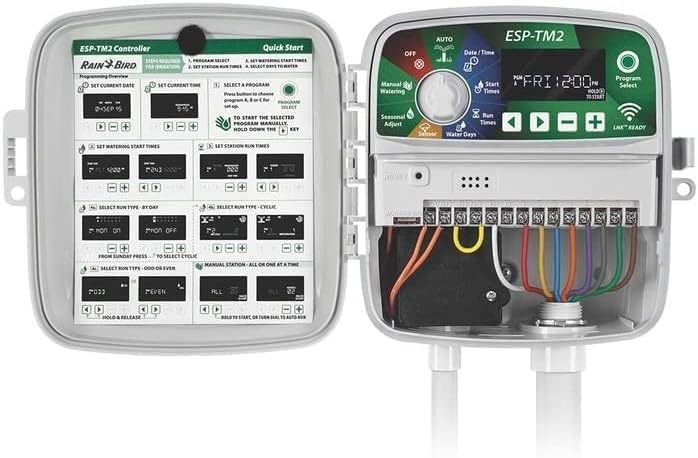
Rain-Bird
$204.00
In stock on Amazon
Check price on AmazonHunter Hydrawise — Predictive Watering
Hunter Hydrawise’s Predictive Watering works on a similar ET principle but layers in forecast data from a network of local weather stations, running a predictive pre-water if a heat event is coming, then suppressing runs post-rain. The platform is genuinely strong for contractors and semi-professional landscapers managing multiple properties, because the Hydrawise web dashboard supports multi-site visibility in a single pane. For single-property residential use, that depth can feel like carrying a Swiss Army knife to butter toast. Family Handyman’s How to Install a Smart Irrigation Controller technical walkthrough notes that Hydrawise’s zone setup wizard is more detailed than competitors’, which helps intermediate users configure spray head types correctly — but at the cost of a longer onboarding curve.
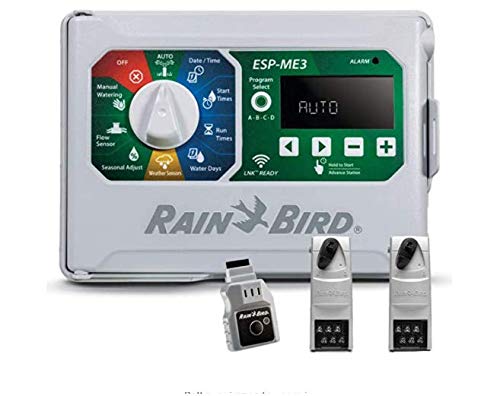
Rain-Bird
$399.99
In stock on Amazon
Check price on AmazonRain Bird ESP-ME3 — LNK Module + App
Rain Bird’s ESP-ME3 is the most hardware-centric platform of the three. The controller itself is a professional-grade modular unit — commonly specified by licensed irrigation contractors precisely because it pairs naturally with Rain Bird valve assemblies, rotor heads, and flow sensors. The smart features are additive, not native. Once the LNK WiFi module is installed and the app is connected, you get weather-based watering adjustments and remote access, but the scheduling logic does not have an equivalent to Rachio’s Flex Daily. You’re still fundamentally setting run times; the controller adjusts them by a percentage based on ET. The Irrigation Association’s Smart Controller Performance Testing Guidelines (2023 edition) describes percentage-based ET adjustment as a reliable and well-understood method — it is simply less autonomous than a true soil-moisture-modeled approach.

Rachio
$180.08
In stock on Amazon
Check price on AmazonSmart Home Integration and App Ecosystem: Practical Reality vs. Marketing Copy
All three platforms offer Amazon Alexa and Google Home voice control. Apple HomeKit is where the field splits.
Rachio 3 supports HomeKit natively — you can add it to the Home app, trigger zones from an Automation, and include it in a “leaving home” scene. For smart-home integrators and tech-forward buyers building around the Apple ecosystem, this is a meaningful differentiator. Rachio also maintains a published API that third-party developers and automation power users have built extensively around; owners in long-run reviews consistently cite the API as one of the platform’s stickiest features.
Hunter Hydrawise does not offer native HomeKit support as of May 2026. Alexa and Google Home integrations are present, but they operate at a voice-command level — “turn on zone 3 for 10 minutes” — rather than as deep automation triggers. The web dashboard compensates with robust data logging and flow sensor integration that neither Rachio nor Rain Bird matches at the same price point, but if HomeKit is a hard requirement, Hydrawise effectively removes itself from consideration.
Rain Bird’s app has improved significantly since the ESP-ME3’s initial LNK launch, but the ecosystem integration story remains thinner. There is no HomeKit support, Alexa and Google Home integration exists but is limited in scope, and Rain Bird does not publish an open API equivalent to Rachio’s. The Landscaping Network’s Smart Irrigation Controllers Buyer’s Guide characterizes Rain Bird’s smart layer as “contractor-convenient, not consumer-polished” — which is an accurate framing for buyers calibrating expectations before purchase.
One practical note on app reliability: Rachio has the most consistent positive feedback on app stability and update cadence across published review sources. Hydrawise’s app has drawn recurring comments about the mobile experience lagging behind the web dashboard — the web dashboard is where the platform’s real power sits. Rain Bird’s app earns solid marks for basic remote access but is not the reason anyone specifies an ESP-ME3.
Flow Sensing, Leak Detection, and Professional-Grade Add-Ons
For systems in the $800–$2,000-plus range with professional-grade valve manifolds and rotors already on the spec sheet, flow sensing — the ability to monitor gallons per minute through each zone and alert on anomalies — is the feature that separates real infrastructure from a glorified timer.
Rachio 3 supports flow sensing via a wired flow meter sold separately and alerts you to unexpected flow events — a broken head, a stuck valve — through the app. Setup is straightforward, and the data integrates into the water-use reporting that Flex Daily draws on.
Hunter Hydrawise has arguably the strongest flow sensing implementation in this group. The platform can detect burst pipes, broken heads, and high-flow anomalies at a zone level, and the historical data reporting available on paid tiers gives you trend analysis that irrigation contractors find genuinely useful for system auditing. If flow sensing is a primary driver of the purchase decision, Hydrawise takes it most seriously of the three platforms compared here.
Rain Bird ESP-ME3 supports flow sensing as well, via compatible Rain Bird flow meters wired to the module. Given that the ESP-ME3 is typically specified alongside Rain Bird’s professional valve and rotor components, the parts-continuity argument holds here too — same supplier, same field-support infrastructure, reduced risk of compatibility issues during service calls.
The Decision Rules
If you’ve read this far, you have a decision pending. Here’s how to close it.
If you want the most autonomous water management with zero ongoing subscription cost and your home runs Apple HomeKit: Rachio 3 is the pick. Flex Daily’s ET-based scheduling is the most sophisticated no-subscription option on the market in this comparison, the HomeKit integration is native, and the free-tier feature set has not been materially degraded as of May 2026. This Old House’s 2025 roundup lists it as a top pick for homeowners who want hands-off operation after initial setup.
If you’re a semi-professional landscaper managing multiple residential accounts, or you’re pre-specifying for a contractor who already runs the Hydrawise dashboard: Hunter Hydrawise earns its subscription tier. The multi-site visibility, flow sensing depth, and contractor tooling justify the recurring cost at professional scale. For a single-home buyer, do the math — subscription fees across a controller’s decade-long lifespan add up to a material line item, and the Landscaping Network’s buyer’s guide specifically recommends single-site homeowners confirm which features they actually need before committing to a paid tier.
If your valve manifold and rotor heads are already Rain Bird, or you’re handing installation to a contractor who specifies Rain Bird exclusively: The ESP-ME3 is the coherent choice. The smart features are additive rather than central to the platform’s value proposition, and parts continuity reduces long-run serviceability risk. Budget for the LNK WiFi module as a hard line item from day one — the base controller price does not include it.
If HomeKit is a hard requirement and budget is the binding constraint: Rachio 3 only. It is the sole WaterSense-certified option in this comparison with native HomeKit support at the residential price point. The EPA WaterSense Specifications for Weather-Based Irrigation Controllers confirm its certification status, which also preserves eligibility for utility rebate programs in qualifying service areas.
One last note on timing: Hunter’s Hydrawise subscription pricing has shifted more than once in recent product cycles. If you’re evaluating total cost of ownership, build in flexibility for that line item — and check the current plan structure directly on Hunter’s published pricing page before you commit. The hardware decision is relatively easy to reverse; platform lock-in takes longer to undo, and subscription-tier changes after purchase are a documented pain point for residential buyers who entered on an introductory rate.